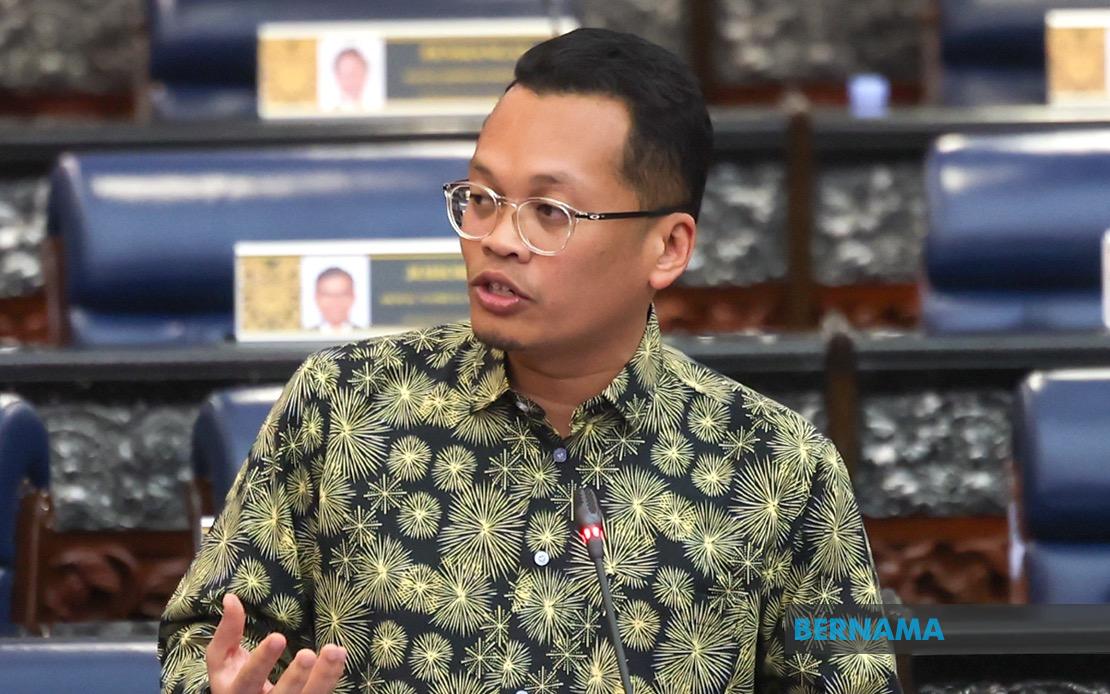
Govt saves nearly RM100 bil if Energy Efficiency and Conservation Bill passed by 2050: Nik Nazmi
Govt saves nearly RM100 bil if Energy Efficiency and Conservation Bill passed by 2050: Nik Nazmi
Govt saves nearly RM100 bil if Energy Efficiency and Conservation Bill passed by 2050: Nik Nazmi
By Rebekah Teo
KUALA LUMPUR – The Natural Resources, Environment and Climate Change (NRECC) Ministry has affirmed that the government will save RM97.1 billion, if the Energy Efficiency and Conservation Bill 2023 is passed by the year 2050.
NRECC Minister Nik Nazmi Nik Ahmad (Setiawangsa-PH) confirmed this in a parliamentary written response to a query by Datuk Seri Dr Wan Azizah Wan Ismail (Bandar Tun Razak-PH), emphasising that the bill’s enforcement would also provide 1,000 new job opportunities on the industrial, commercial and domestic (residential) sectors.
The question was about the NRECC’s methods of achieving zero greenhouse gas (GHG) emissions as early as 2050, to reduce the negative effects of climate change as the 12th Malaysia Plan (RMK-12) target.
“The government is expected to save an estimated energy consumption of 2,017 million Gigajoules (GJ) (a unit of measurement of energy consumption), or the equivalent of RM97.1 billion, and reduce carbon emissions by 197,877 ktCO2 (kilotonnes of carbon dioxide).
“The country is also expected to have 1,000 new job opportunities, enabling the government to make plans for the country's energy development more effectively,” he said.
He said that enacting the bill would create a comprehensive energy efficiency legal framework to regulate, enforce, coordinate, and implement energy efficiency initiatives including thermal energy.
He also said that the bill is closely related to the energy transition initiative towards achieving the aspiration of net-zero GHG emissions by the year 2050 by the energy-related sectors.
“In order to reduce the negative effects of climate change, the country also needs to adapt to the effects of climate change that (it) is currently facing.
“The Government has applied for funds under the Green Climate Fund to develop a National Adaptation Plan that will look at the effects of climate change such as floods, sea level rise, coastal erosion, and drought on five main sectors.
“(This includes) water security and coastal resources, agriculture and food security, infrastructure, energy and developed environments including cities, forestry and biodiversity, as well as public health,” he said.
He mentioned various methods used to reduce GHG emissions as outlined in Chapter 8 RMK-12, which includes mitigation actions through renewable energy use programmes and practicing energy efficiency through the National Energy Efficiency Action Plan programme, public transport based on rail or trains.
He also mentioned that other methods involved the use of energy-efficient vehicles, palm-based biodiesel in a petroleum diesel blend, natural gas in vehicles as well as gas and oil sub-sector programmes.
He added that the Ministry will develop Long Term Low Emission Development Strategies (LT-LEDS), which will provide policy direction and action plans until net zero aspirations are achieved.
On July 6, Nik Nazmi had reportedly said that Malaysia will focus on energy transition and the reduction of GHG emissions at the 2023 United Nations Climate Change Conference, or Conference of the Parties of the United Nations Framework Convention on Climate Change, more well-known as COP28.
Nik Nazmi is expected to be part of a delegation led by Prime Minister Datuk Seri Anwar Ibrahim for the World Climate Action Summit in December, to be held alongside COP28 in Dubai on Friday.
– November 28, 2023